Every branch has its own AAR Registry — a chronological log of After Action Reports filed against operations the branch ran, each card stamped with the date, a severity badge (minor / patch / major), and the SOP it impacted.
Tags (`#mining`, `#ambush`, `#escort`, etc.) and the SOP-Linked badge let leadership grep the registry by failure mode, so the next mission planner can review every prior incident that matches the profile before they roll out.
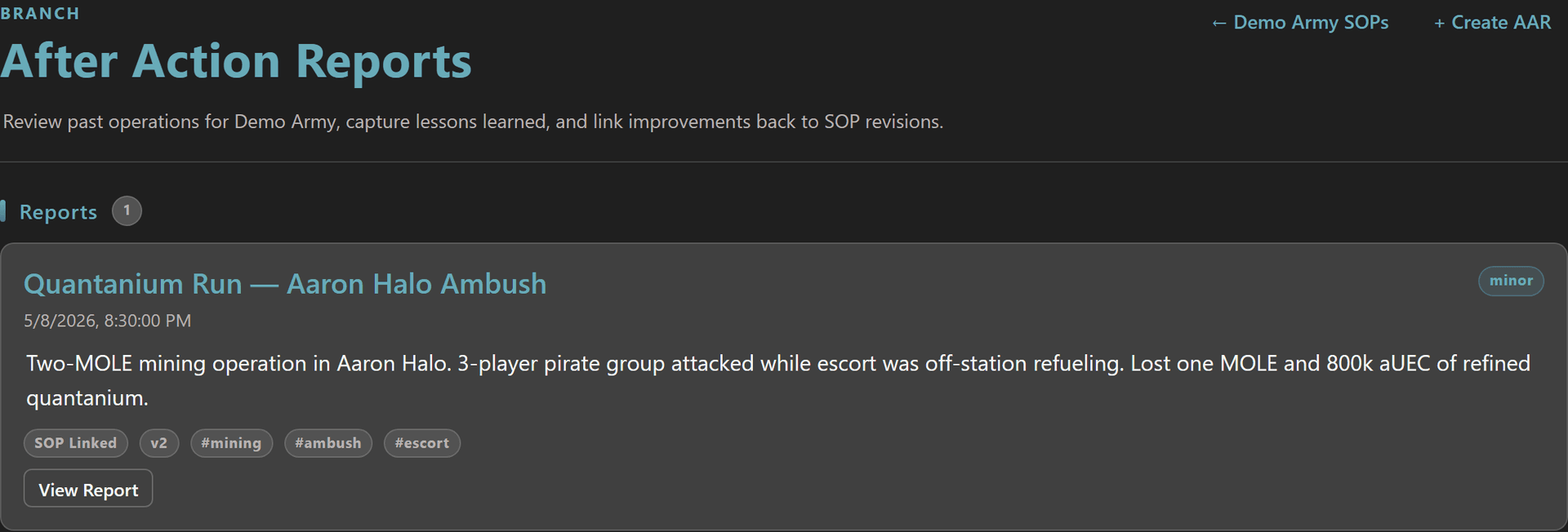
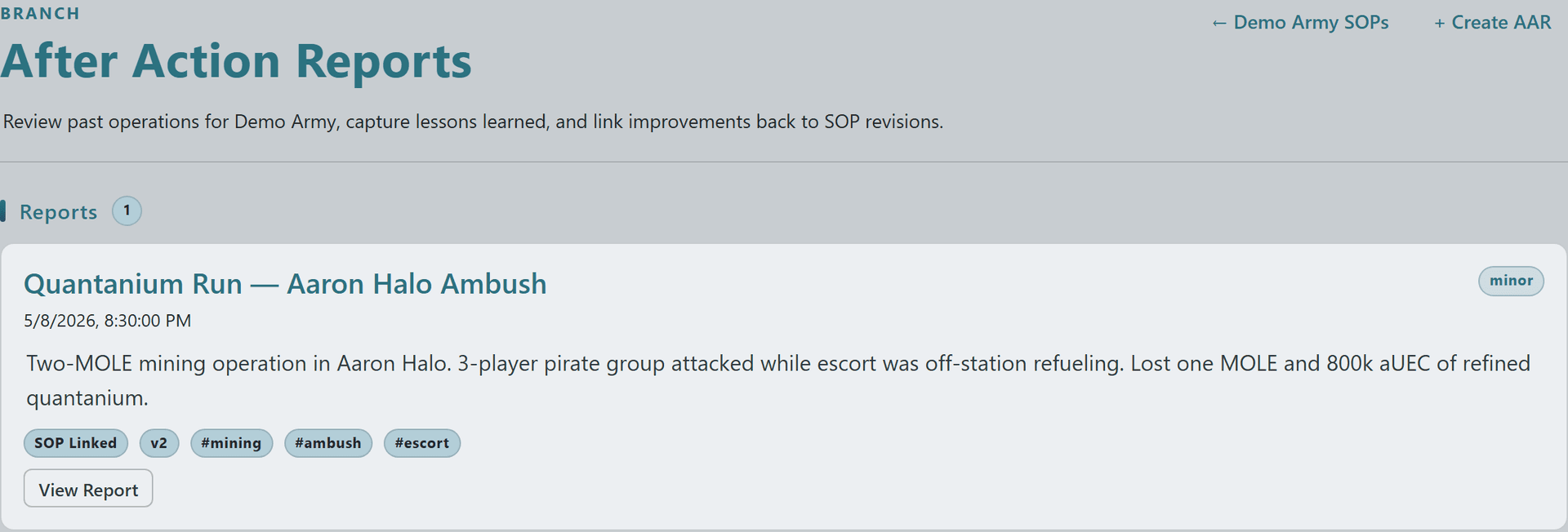
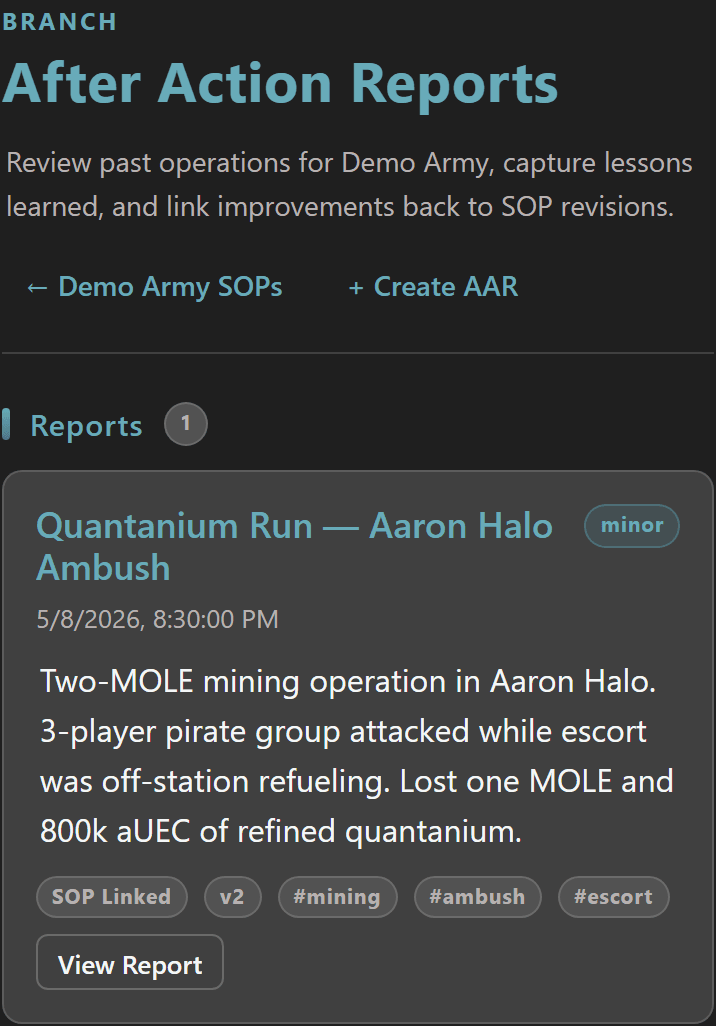
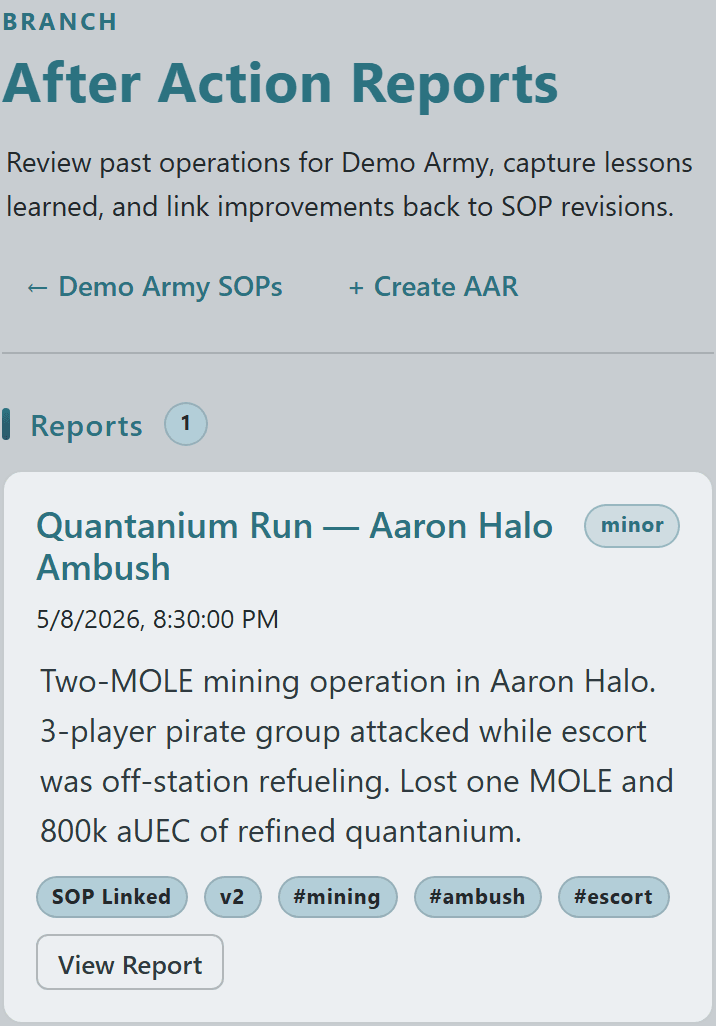
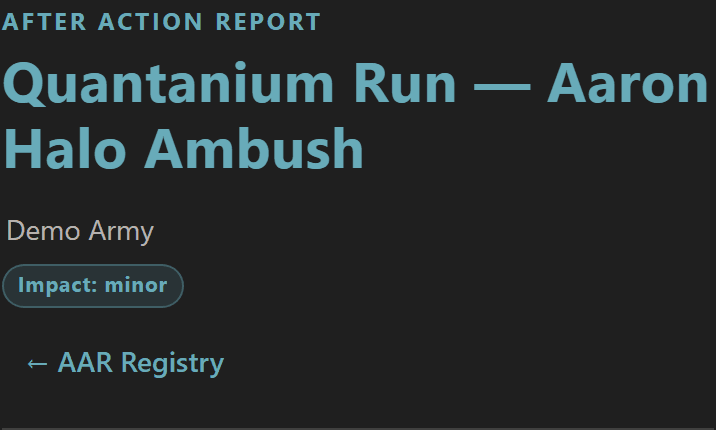
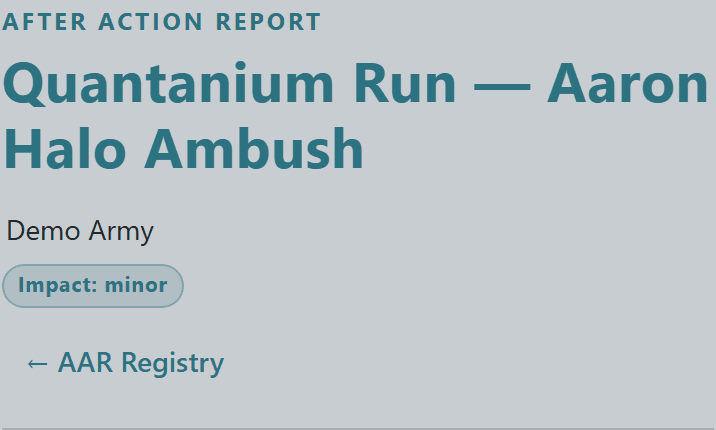
Click into any AAR and the header lays out the incident at a glance — title, the branch that filed it, and an Impact badge sized to the severity (minor here, capable of escalating to major when a procedure change is needed).
A back link to the AAR Registry sits in the action row so leadership can quickly compare adjacent incidents during a debrief or planning session.


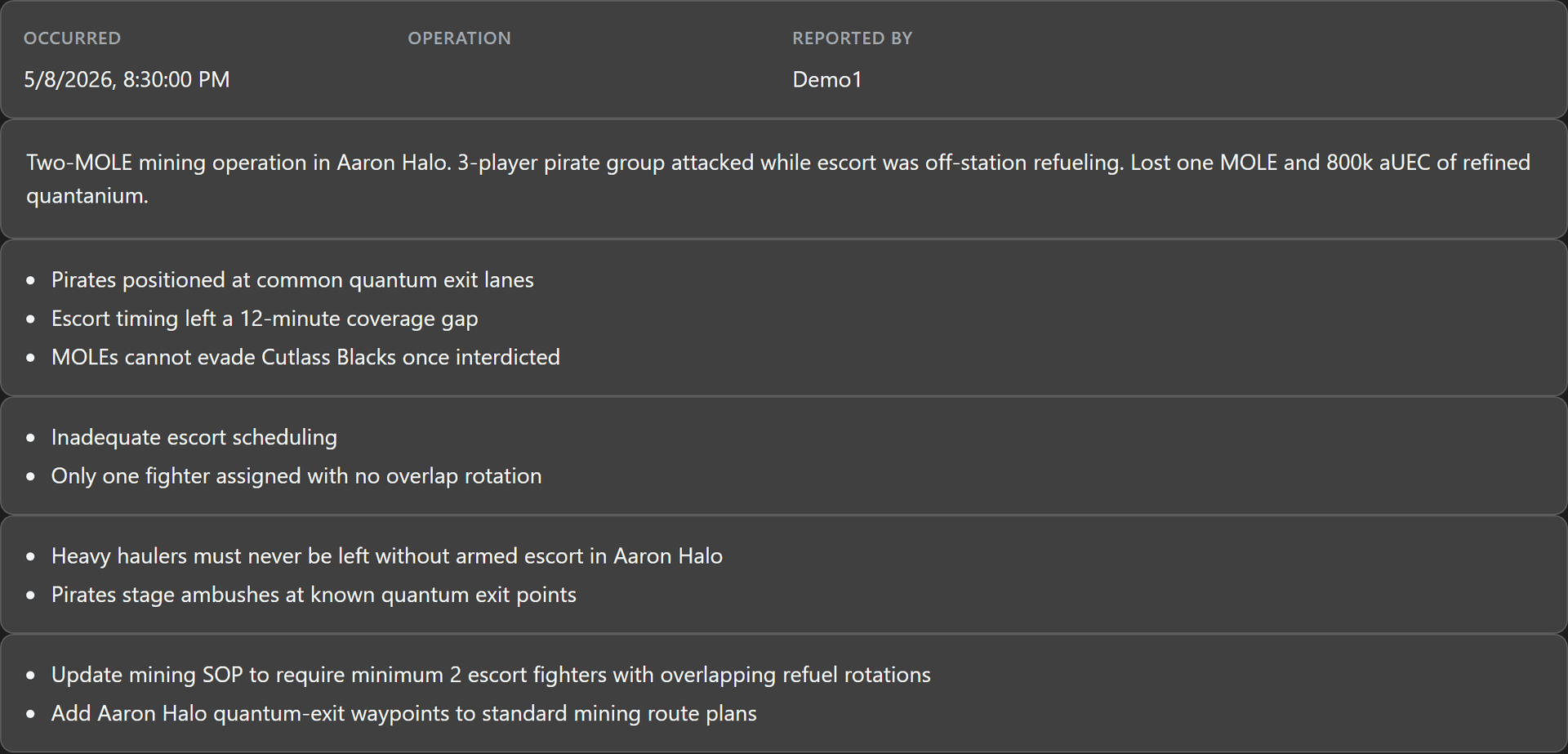
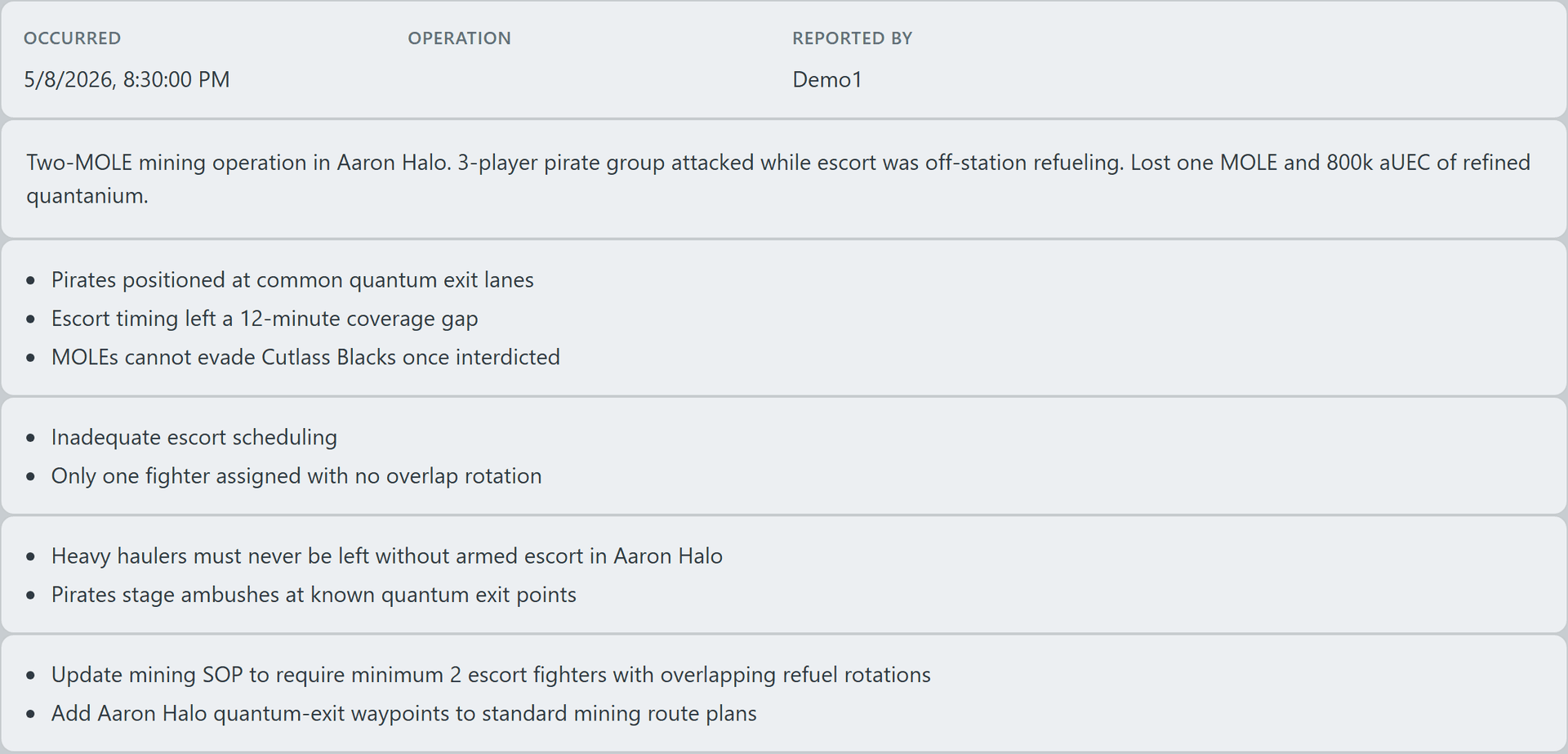
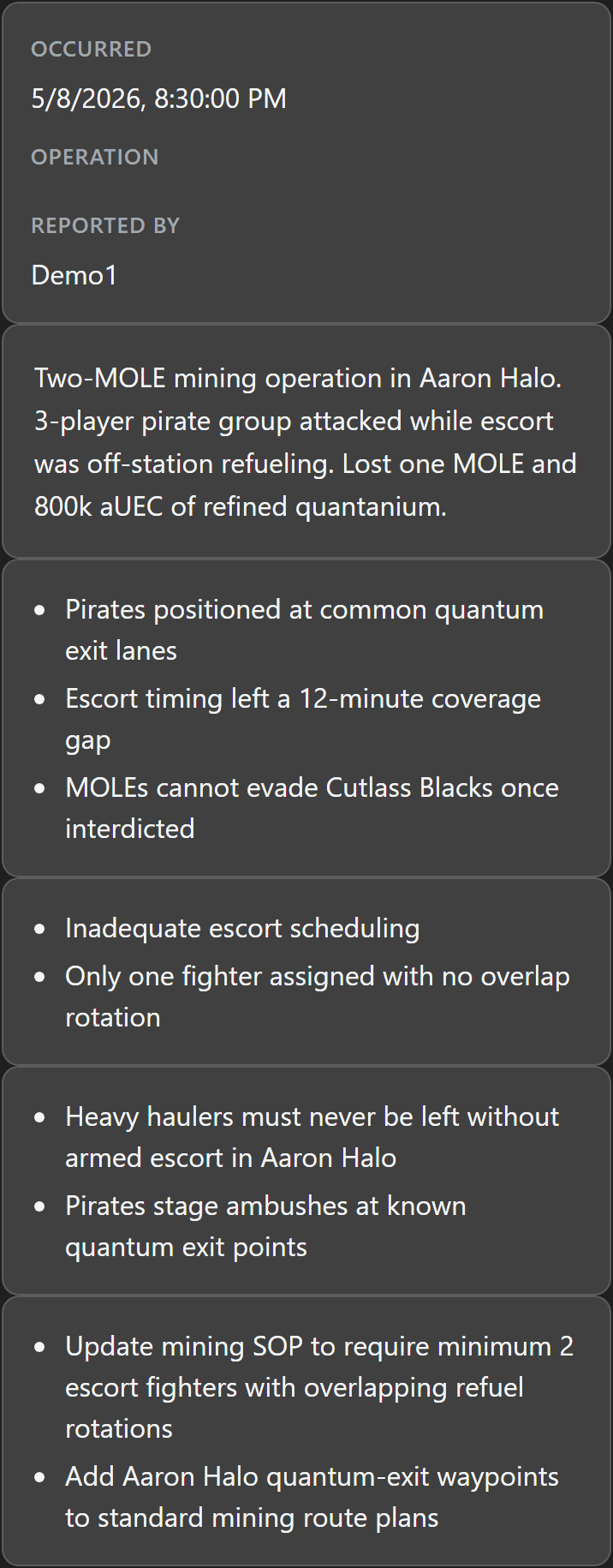
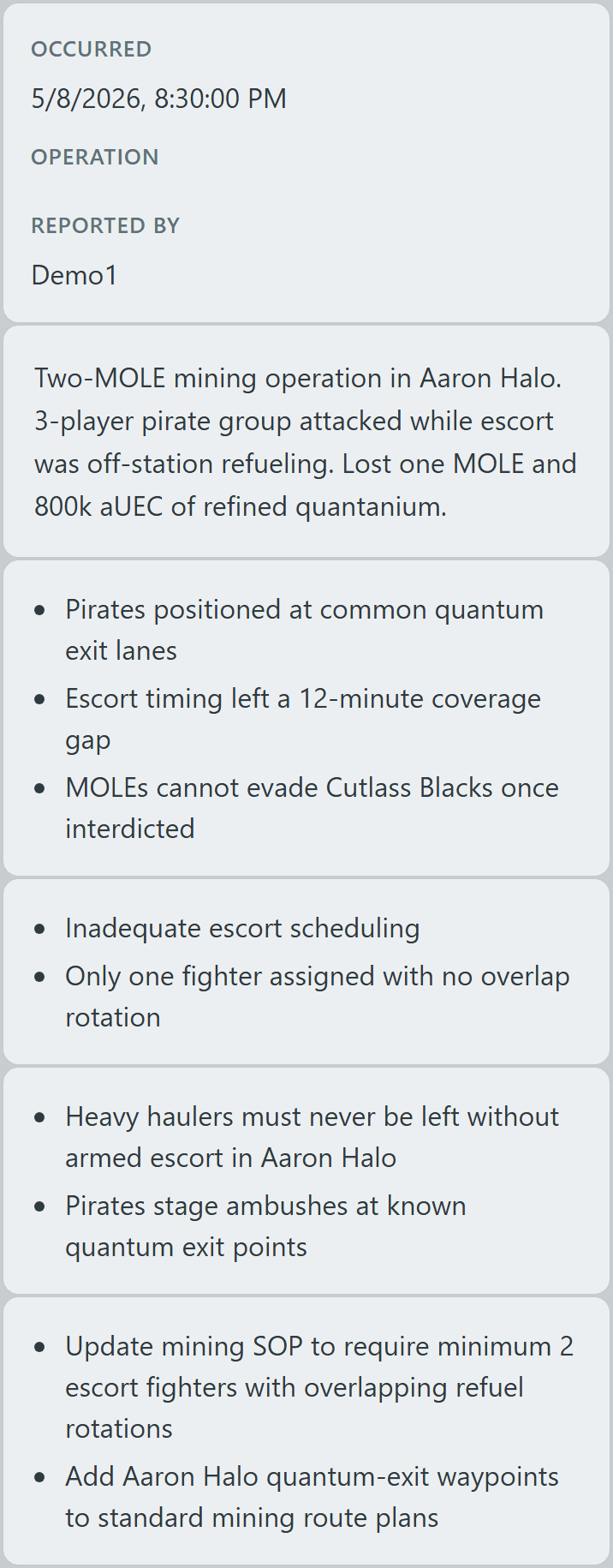
The AAR body is the structured debrief itself — Occurred / Operation / Reported By stamps, the incident summary, then separate sections for observations, root causes, lessons learned, and action items.
Action items are where the registry closes the loop with SOPs: "Update mining SOP to require minimum 2 escort fighters with overlapping refuel rotations" maps directly into the next SOP revision, with the AAR Impact list on that SOP page citing this report as the trigger.